Why 'Just Push Through' Doesn't Work During Perimenopause
You have been pushing through your entire life. Through exhaustion. Through symptoms your doctor dismissed as stress. Through carrying everything for everyone while putting yourself last. It worked, until perimenopause. Now the same approach that got you here is working against you, and your body is making that very clear.
This is not a motivation problem. It is a biology problem.
What Your Body Is Actually Doing
Perimenopause is not a mood or a mindset. It is a complete hormonal recalibration that touches every system in your body. Declining estrogen and progesterone affect how your body produces and uses energy, how you respond to stress, how deeply you sleep, and how your brain regulates mood. These are not inconveniences. They are physiological shifts that require a different approach than the one you have been running on.
Research is clear that chronic stress during this transition increases the risk of cardiovascular disease, type 2 diabetes, depression, and cognitive decline. Pushing through is not neutral. It has a cumulative cost that shows up later if it is not addressed now.
When your body is asking for rest and you override that signal repeatedly, you are not being strong. You are borrowing against your own health.
What Self-Care Actually Means During This Transition
Self-care during perimenopause is not a luxury add-on. It is the intentional protection of your physical and mental capacity so you can function at the level you want to function at. That is a different framing than bubble baths and face masks, and it matters.
Sleep is the foundation. Seven to nine hours is not aspirational, it is functional. A cool bedroom, moisture-wicking sheets for night sweats, and consistent sleep and wake times are practical starting points. If you are waking two or three times a night consistently, that warrants a conversation with a provider, not just better sleep hygiene.
Food and movement follow. Protein at every meal supports muscle mass and blood sugar stability, both of which shift during perimenopause. Strength training two to three times a week protects bone density. Movement that feels good to your body on a given day is more sustainable than a program that treats every day the same.
Stress management is not optional. Fluctuating estrogen makes your stress response more reactive, which means what you could absorb before may genuinely feel like more now. That is not weakness. That is chemistry. Deep breathing, time in nature, and reducing unnecessary obligations are not indulgences. They are maintenance.
The Harder Piece: Boundaries and Help
Black women and women of color are conditioned early to handle it, all of it, without complaint. That conditioning does not disappear during perimenopause. But the cost of it becomes harder to ignore.
Saying no to one obligation this week is not a small thing. It is practice. Asking for help with something you would normally absorb alone is not failure. It is accurate resource allocation. The women who move through this transition with the most capacity intact are the ones who stopped treating their own needs as optional.
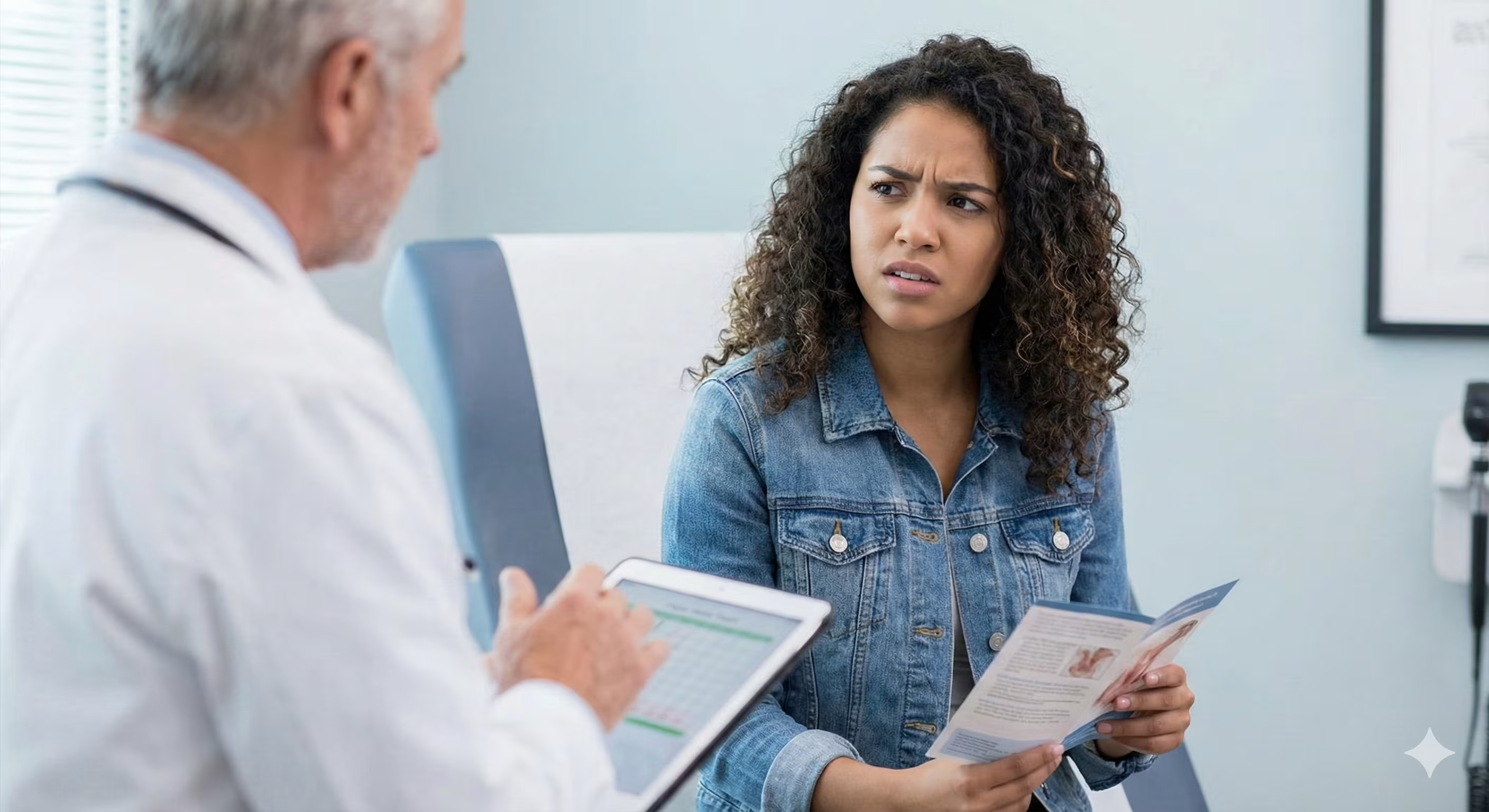
You also deserve a provider who takes your symptoms seriously. If you are being told your concerns are just stress, or that you are too young, or that things will eventually settle on their own without any plan, find someone else. Forty-three percent of Black women in a 2025 BWHI survey reported being discriminated against or treated unfairly when seeking healthcare. You are not imagining it when it happens. And you are not required to stay.
Building the Right Support Around You
Part of what makes perimenopause harder to navigate alone is that most of the available information was not built with Black women and women of color in mind. Our symptom profiles differ. Our experiences with the healthcare system differ. The cultural pressures we carry into this transition differ.
That is the gap The Peri Nation was built to close. Not with generic wellness content, but with culturally grounded education, real frameworks, and community with women who understand the specific terrain you are navigating.
You do not have to figure this out by pushing harder. You just have to stop going it alone.